Bridging the Gap Between Belief & Practice

Most providers recognize the connection between oral health and systemic health. But in many practices, testing is still done case by case, often in response to symptoms.

If oral health is part of the broader picture, testing cannot be limited to when disease is already visible. It needs to be part of how risk is evaluated and followed over time. 

A more structured approach to testing helps bring clinical practice in line with what many providers already understand.

Perio Box w Tube web
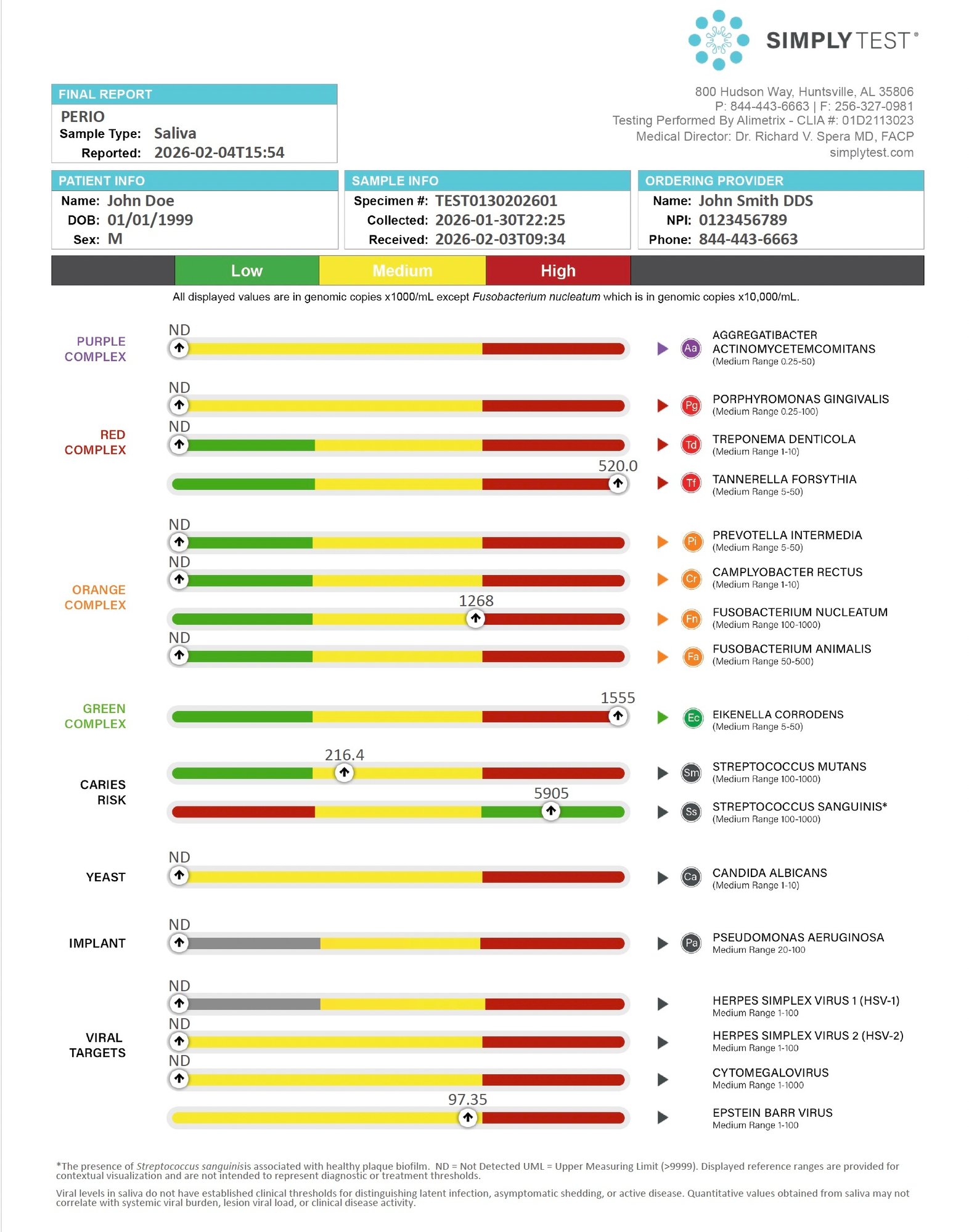
Perio Sample Report 3.9 Image

Why Symptoms Alone Are Not Enough

Clinical signs only show part of the picture.

By the time bleeding, pocket depth changes, or radiographic finding are evident, microbial shifts may already be underway. Patients who appear stable may still carry bacterial patterns that influence risk, progression, or response to care.

A saliva-based test adds another layer of clinical information.

Detect earlier
Identify elevated bacterial risk before clinical findings fully reflect disease activity.

Add context to clinical presentation
Clinical observations remain essential, but they do not always reflect the type or level of microbial activity.

Measure change over time
Without a baseline, it is more difficult to determine whether a patient is improving, stable or progressing.


A More Structured Approach

Testing should fit naturally into clinical workflow and support decision making over time.

Establish a baseline

Test early to understand each patient's microbial profile, even when symptoms are limited or absent.


Retest based on risk

Use repeat testing for maintenance patients, higher-risk cases, and situations where ongoing monitoring is clinically relevant.

Build it into workflow

Incorporate testing into new patient exams, periodontal maintenance, and pre or post treatment evaluations.

Follow change over time

Compare results across visits to better understand progression, stability, and response to care.

Who to Test Based on Risk

Patients with signs of periodontal disease

Patients in periodontal maintenance or with a history of disease

Patients with systemic or inflammatory risk factors

Patients not responding as expected to treatment

Patients before or after restorative procedures such as implants or extractions

Patients interested in preventive care or establishing a baseline

Systemic Risks Connected to Oral Pathogens

Beyond the Gums

Oral health is systemic health.
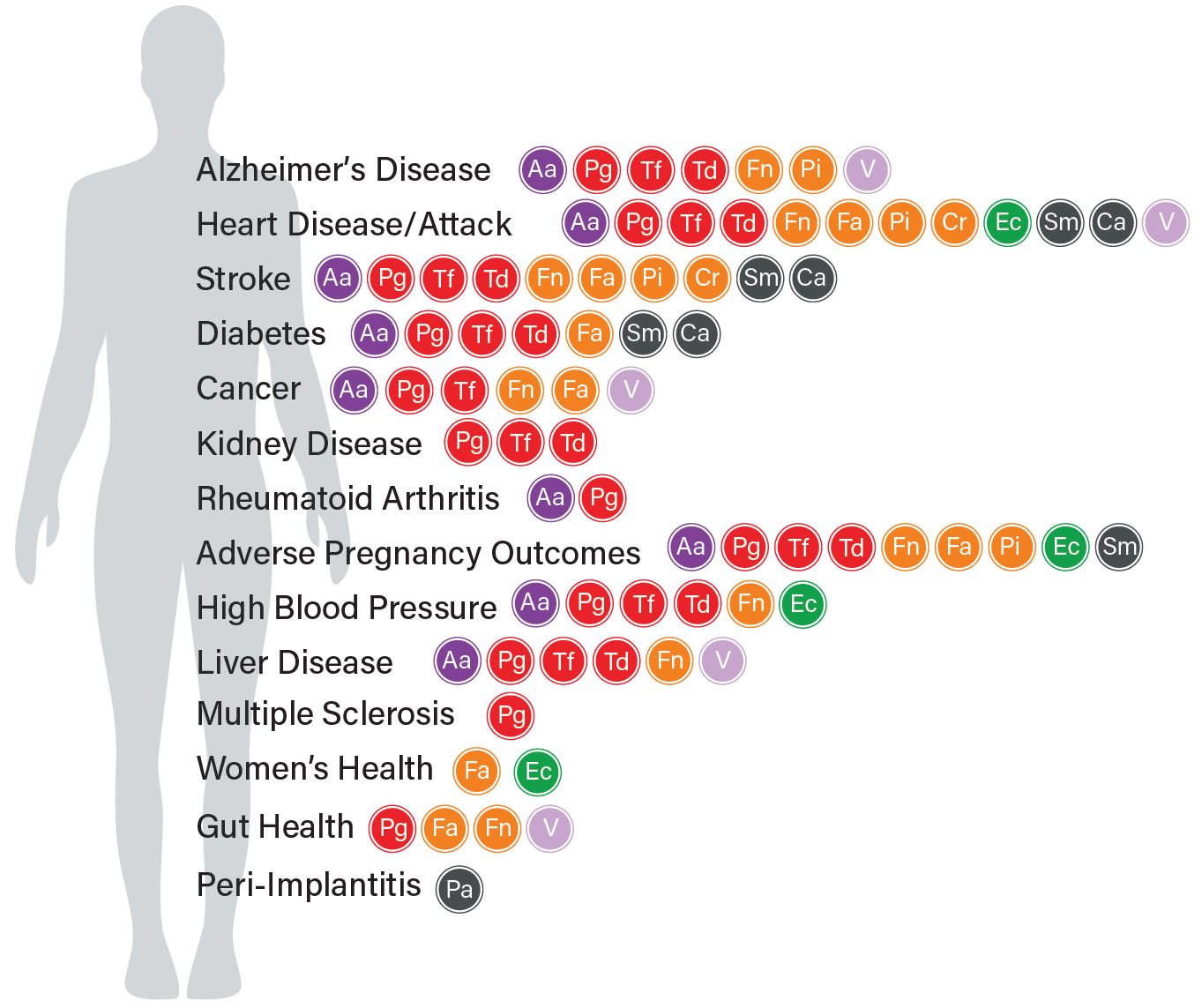
The pathogens associated with periodontal disease are not limited to the mouth. Oral dysbiosis contributes to inflammatory burden, which may extend beyond the oral environment.

The bloodstream pathway
Keystone pathogens can enter the bloodstream, triggering or worsening chronic inflammatory conditions throughout the body.

The inflammatory burden
When oral dysbiosis persists, it may contribute to the broader inflammatory stress. By the time clinical symptoms appear, systemic impact may already be underway. 

This connection is increasingly recognized across healthcare. The American Heart Association recently stated that the link between periodontitis and atherosclerotic cardiovascular disease is stronger than previously recognized.

According to a recent scientific statement from the American Heart Association, the association between periodontitis and atherosclerotic cardiovascular disease is stronger than previously recognized and that treatment of periodontal disease can reduce inflammatory factors and
improve intermediate risk markers associated with heart disease.

Raising the Standard of Care

A defined testing approach provides more than a single point of information.
It supports clearer risk assessment, more informed patient conversations, and better visibility into changes over time.
When testing becomes part of a structured clinical approach, it becomes more useful in guiding care and monitoring outcomes.